Evolution of Hemorrhagic Infarctions on MRI

Evolution of Hemorrhagic Infarctions on MRI
Welcome to another intriguing radiology case study. In our latest release on the Radiant Pixels YouTube channel, we dive into a comparative MRI analysis of an 80-year-old patient, examining scans taken five months apart. This case provides a fantastic look at the evolution of subacute infarctions and the often-perplexing behavior of contrast-enhancing areas over time.
The Initial Findings and the Mystery Enhancement
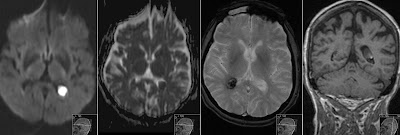
The baseline exam reveals distinct areas of tissue loss and gliosis, accompanied by contrast enhancement in the medial parts of the right occipital lobe. We also observe similar, smaller contrast-enhancing areas in the right lateral frontal lobe, specifically at the level of the inferior frontal gyrus.
The initial radiological report strongly suggested these locations were indicative of subacute to old infarctions within the posterior cerebral artery territory. However, the persistent contrast enhancement presented a specific diagnostic question.
To investigate the enhancing areas, we utilized Susceptibility Weighted Imaging (SWI) sequences. These sequences are highly sensitive to hemosiderin, and they successfully highlighted deposits in both the frontal and occipital lobes. This confirmed that the contrast enhancement was driven by the hemorrhagic component of the infarction, causing a localized disruption of the blood-brain barrier.
The 5-Month Follow-Up: Tracking the Evolution
Reviewing the follow-up exam performed five months later allows us to track the definitive evolution of these hemorrhagic infarcts:
Volume Reduction: While the contrast-enhancing areas in the occipital region are still visible, their overall volume has significantly diminished.
Fluid Resorption: Initial fluid accumulation caused by tissue necrosis has completely resorbed, leaving only the contrast-enhancing regions behind.
Tissue Changes: Zoomed-in coronal FLAIR sequences beautifully illustrate the anatomical progression—where edema was once present, we now see clear tissue loss.
Ruling Out Alternative Diagnoses: Despite the clinical question of Cerebral Amyloid Angiopathy (CAA), the absence of additional hemorrhages across the brain helped rule it out.

Watch the Full Case Review
The major takeaway from this case is how follow-up imaging provides crucial confirmation of our initial findings regarding hemorrhagic components and persistent blood-brain barrier disruption.
To see the scans side-by-side and follow the detailed radiological breakdown, watch the full video on the Radiant Pixels channel here.